

This very day, a so-called Coalition of the Willing, predominantly made up of European officials, gathered in Paris with delegates of US President Donald Trump, attempting to secure further headway on a lasting settlement for the embattled nation.
With Ukraine's President Volodymyr Zelensky insisting that a roadmap to end the war with Russia is "90% of the way there", not a single person in that gathering wished to jeopardise retaining the Washington onboard.
Yet, there was an enormous glaring omission in that grand and glittering gathering, and the underlying tension was extremely strained.
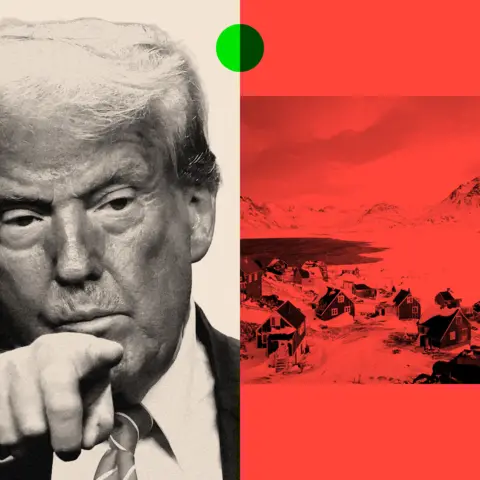
Recall the developments of the past week: the US administration's contentious incursion in Venezuela and the US president's declaration following this, that "our national security requires Greenland from the standpoint of defense".
This massive island is the world's largest island – it's six times the dimensions of Germany. It is located in the Arctic but is an autonomous territory of the Kingdom of Denmark.
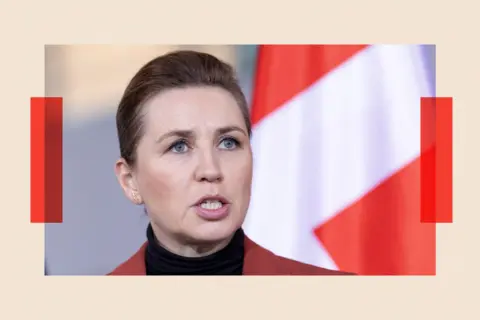
At the summit, Mette Frederiksen, Copenhagen's leader, was positioned opposite two influential figures acting for Trump: diplomat Steve Witkoff and Trump's adviser Jared Kushner.
She was facing pressure from her EU allies to refrain from provoking the US over the Arctic question, in case that affects US assistance for Ukraine.
Europe's leaders would have much rather to keep Greenland and the debate on the war apart. But with the tensions escalating from the White House and Denmark, leaders of major EU countries at the talks released a statement stating: "This territory is part of the alliance. Security in the Arctic must therefore be achieved jointly, in partnership with NATO allies such as the America".
"Sovereignty is for Denmark and the Greenlandic authorities, and no one else, to determine on issues concerning the kingdom and Greenland," the communiqué continued.
The announcement was welcomed by Greenland's prime minister, Jens Frederik Nielsen, but analysts contend it was slow to be drafted and, owing to the small group of supporters to the statement, it did not manage to show a Europe in agreement in intent.
"Had there been a unified position from all 27 EU partners, plus NATO ally the UK, in support of Copenhagen's sovereignty, that would have conveyed a resounding warning to America," stated a European foreign policy expert.
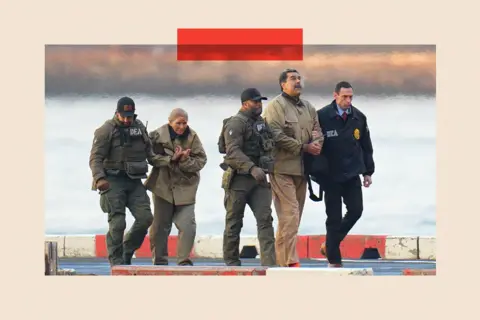
Reflect on the contradiction at play at the Paris summit. Multiple EU government and other officials, from NATO and the European Union, are seeking to secure the cooperation of the Trump administration in guaranteeing the future independence of a continental state (the Eastern European nation) against the aggressive geopolitical designs of an external actor (Moscow), on the heels of the US has intervened in independent Venezuela with force, detaining its leader, while also still actively threatening the sovereignty of another European nation (Denmark).
To compound the situation – Denmark and the US are both members of the military bloc the North Atlantic Treaty Organization. They are, according to Danish officials, extremely strong partners. Or were.
The dilemma is, if Trump were to act upon his goal to assert control over the island, would it mark not just an severe risk to the alliance but also a major challenge for the European Union?
Europe Faces the Danger of Being Marginalized
This is not the first time Trump has spoken of his intention to control Greenland. He's floated the idea of purchasing it in the past. He's also refused to rule out taking it by force.
Recently that the landmass is "vitally important right now, Greenland is patrolled by foreign vessels all over the place. Our security demands Greenland from the vantage point of strategic interests and Copenhagen is incapable to do it".
Denmark refutes that assertion. It not long ago pledged to invest $4bn in Arctic security encompassing boats, drones and aircraft.
Pursuant to a treaty, the US has a defense installation presently on Greenland – founded at the beginning of the Cold War. It has reduced the total of troops there from approximately 10,000 during the height of Cold War operations to about 200 and the US has often been faulted of neglecting polar defense, until now.
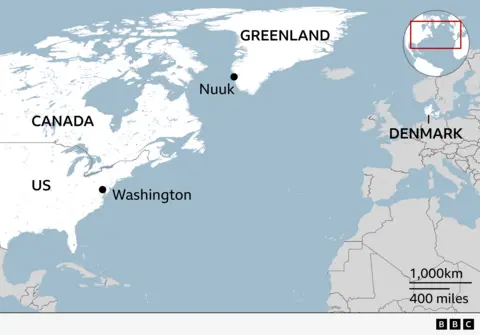
Denmark has suggested it is willing to talk about a expanded US presence on the territory and more but in light of the US President's warning of independent moves, Frederiksen said on Monday that the US leader's goal to acquire Greenland should be considered a real possibility.
Following the US administration's actions in Venezuela this past few days, her counterparts across Europe are taking it seriously.
"This whole situation has just underlined – once again – the EU's fundamental weakness {


